Horror literature, as we said, is the child of science fiction.. horror stories and films increase and achieve success in times of famines and wars and epidemics and fear and declining morale.
The whole idea is in catharsis.. this is a term in the world of the novel that describes the effect of "tragedy" on the reader. Psychology is interested in this subject.. and mentions that very term, "Catharsis".
When an accident happens by the roadside, you find people's cars and passers-by slowing down or stopping to watch the corpses and the blood.. this is a quick cathartic process, by which the person says to himself "I'm fine, I'm not the one bleeding".. when you read a frightening novel or watch a horror film you practice the same principle.. "Yes, I'm stressed and I have problems and there's an epidemic/ war/ siege.. but thank God.. I'm okay.. I'm better off than others.. there are people right here in front of me on the screen who have become zombies and are eating each other".
Stories of the cheating man in TV series please women a great deal.. through them she practises this cathartic process, "Ah, my husband is awful and unbearable but he's not a cheater.. I'm still safe", and stories of the cheating woman stir men's passion and they follow them.. "Ah, my wife is nagging and annoying but she's clean.. I'm fine".
You'll notice this even as a man in women's Facebook posts, "Did you see Mahmoud El Meliguy when he cheated on Mai Ezz El-Din with her friend in the global series (Take the rubbish bag with you on your way out??) The lowlife.. and she's her lifelong friend.. etc".. while you as a man the subject doesn't occupy you at all.. at the same time.. and your kids are at their lesson.. you're sitting watching "Freddy vs Jason" with the utmost enthusiasm.. and you're practising catharsis and your mind is relaxing.. the kids might be late outside.. but "Jason" won't come out to them.. nor will "Freddy" come to them in their dreams.. you're happy and your mind is letting off the steam that was about to blow it up.. and your wife doesn't understand what this nonsense you're watching even is.. and all she believes at that moment is that your honour has gone mad.. and she starts posting "May God compensate my patience with good" and "What made me get married, I was fine".. etc...
The problem here is that the writer too practises catharsis, and falls into the trap of his subconscious without feeling it.. in times of economic depression, for example, zombie stories spread.. the zombies are the crushed working class who find nothing under depression but to turn to crime.. the vampire is always the wealthy man who blackmails others and strips them of their rights.. the wolf man is, in the writer's unconscious.. the free man of lofty motives.. the middle-class man whom a series of events and shocks led to turn into a monster.
The problem is that right now, amid the ruin in the world, we no longer need catharsis.. we're already full and the scene of blood has become boring to us.. so when the writer today presents you with a horror novel or a frightening film.. to you that has become nonsense.. who remembers when the film "Evil Dead" came out in 2014, after revolutions and terrorism and blood and filth?
Do you remember the mockery with which it was met on social media.. despite it being a horror film?
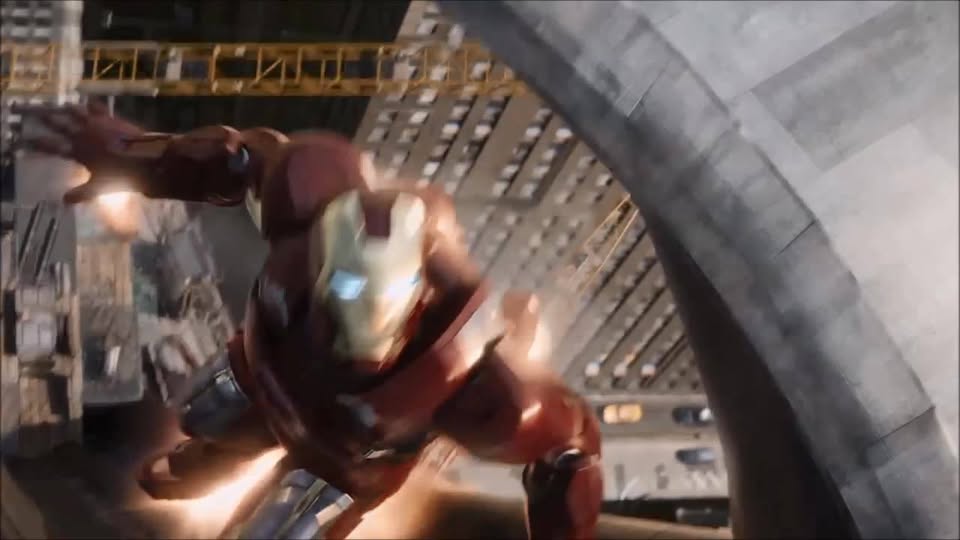
In the midst of collapse and depression and poverty and defeat, superhero stories also spread.. like the Marvel film series.. and every one of us in his mind loves a superhero and looks at him with hope as the saviour and deliverer.. or the character that he himself could turn into if he were given the chance.. "Superman" first appeared on paper during the Great Depression in America.. and made people feel that there was hope...
So people nowadays aren't looking for catharsis as much as they're looking for clean, calm drama.. they long for the past.. for times of quiet and stability and relaxation.. or for work that sparks the imagination without tension or fear.
This is an important thing if you intend to turn professional in writing, especially in the field of science fiction.. you must be acquainted with psychology.. you're not required to be "Carl Jung", mind you. But read a little in it.. or at least consult a specialist.. so you know what to address your audience with and when.
Theme 19 in science fiction literature is "consciousness".. and from it branches super-sensory perception.. reading thoughts and telekinesis and transferring a person's consciousness into another and knowing the future and all those stories.. among its examples in the Future File series were "The Mirror of Tomorrow" and the parts of "The Mind" and "The Terrible Adversary".. about a man who travelled to Tibet and learned telepathy and telekinesis at the hands of the monks.. and developed his abilities to an extraordinary degree and began using them for evil...
Among its examples in the world of cinema was "Resident Evil".. and the heroine in it possessed extraordinary mental powers. And the famous story "Strange Case of Dr. Jekyll and Mr. Hyde" comes under this same theme.
20 - Parallel worlds.. and we talked about this when we referred to the story "The Shadow of the Earth" by Dr. Nabil Farouk.. he also wrote the story "The Second Earth" on the same theme.. and he was greatly influenced by the idea of the Third Reich winning the war, and the ruin that follows from that.. so most of the parallel worlds we were transported to carried this plot, in a different and fascinating style each time.
From the world of cinema, in the film "The One".. about an evil policeman from a parallel world that is technologically advanced.. this parallel world has 124 versions of it.. every time a version of you dies in one of them.. its strength is distributed among the rest.
The policeman decides to make use of this information and travels across the parallel worlds killing his counterparts, until he reaches the last parallel world.. ours.. and his counterpart in it was also a policeman but a clean one.. and he noticed that he suddenly enjoyed astonishing strength.. and his wrinkles were decreasing and his white hair was vanishing.. and this puzzled his wife.. people grow older, not younger.
With the clash between the two.. the evil policeman discovers that his adversary has exactly the same abilities and strength as him.. so he begins to exploit the resemblance between them as if they were twins.. and embroils him in a series of disasters with no solution.
21 - Cybernetics, or "cyberpunk".. the world of pirates and hacker techniques and the giant computer that controls a state.. like the "Matrix" series.
22 - Genetic engineering.. the very first Arab writer to write a novel of this type was Dr. Nabil Farouk.. so he wrote "The Hidden Enemy" and "The Deadly Cell".. about an enemy state that used genetic engineering to create a double of the hero of his series, the intelligence man "Nour".. and he infiltrated vital military installations and stole secrets.. and the state began pursuing the real "Nour" as a traitor.
From the world of cinema, in the film "Splice".. about a scientist and his wife.. they assembled a creature from a mixture of cells from several animals.. and it grew into a complete female.. and despite her frightening appearance she fell in love with the scientist after having believed he was her father.. and she began to turn savage and attack his wife - her mother - in order to monopolize him.
23 - Lost cities.. a city or an entire world in a crack in a mountain or in the depths of the sea or in the jungles of Africa or in any remote black misfortune, and we know nothing about it.. Dr. Nabil wrote on this theme "The Black Curtain".. about an underground city inhabited by savage, human-eating creatures closer to devils in the collective conscience of humans.. and in the world of cinema there were "King Solomon's Mines" and "Indiana Jones" and his series.. and of course the film "Congo" that we mentioned before.
Among the novels that come under this theme is the story "Journey to the Center of the Earth" by "Jules Verne".. in it the heroes find an entire world with its plants and monsters and dinosaurs and oceans.
In 2004 there was the film "Alien vs. Predator".. about a lost city beneath the polar ice.. in it is a female of an alien monster, frozen and loaded with eggs.. she is unfrozen automatically by complex mechanisms every 100 years.. and she lays eggs from which alien monsters emerge, waiting for the "Predator".. and this is another alien being who comes here to hunt these monsters as a sport.
The alien is a mass of fangs and claws and its tail has a bony appendage like a spearhead.. and its blood is a very strong acid.. while the "hunter/ Predator" is technologically advanced and has weapons... there is a video of this film in the first comment.
This film carries a sub-theme, which is "humans between two powers".. humans with all their weakness and limited technologies, caught between two enormous powers.. the sub-themes are many.. from these main themes you can reach them yourself easily.
24 - "Beyond the fields we know".. in this story there is a completely different world with its own vocabulary and rules and creatures.. and even the heroes of the story might not be human at all.. like the "The Lord of the Rings" series.. and the world of "Asgard" in the "Marvel" stories. Among what Dr. Nabil wrote under this theme are the pocket novels "The Moon Prison" and "Point Zero".
Blending some themes.. "more than one theme" meaning in a single work.. is something understandable and acceptable and grants the science fiction story richness.. but this comes under "writing techniques".. which we can talk about, after we have finished the themes, in the next episode...
And the conversation still has more to come.
---------
Previous posts are in the first comment.