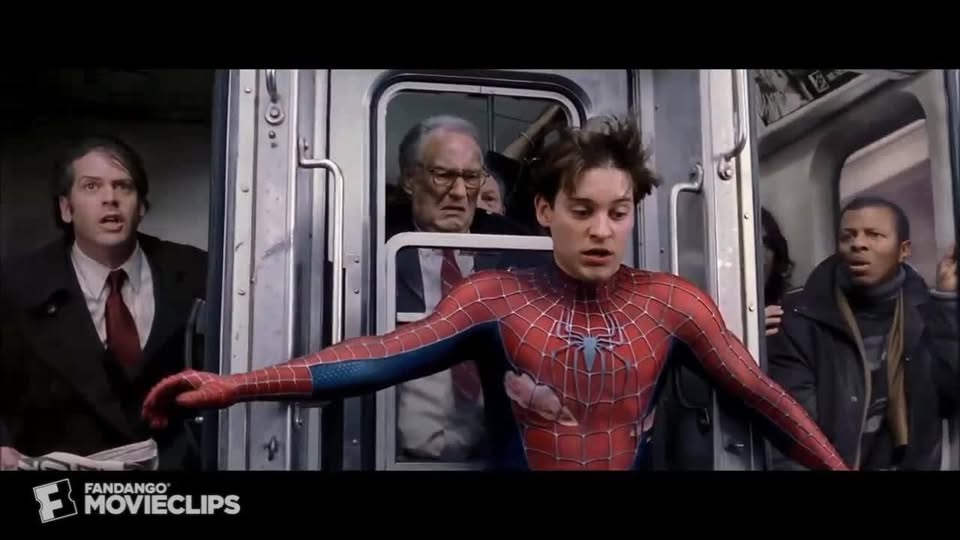
- Science fiction.. is divided into two types.. soft science fiction.. and "hard sci-fi"... In hard science fiction you commit, as you write, to the rules of science and logic in a harsh, strict way to an astonishing degree.. you cannot violate the known scientific rules unless you are going to set a new rule! You cannot talk about an invention that does not exist unless you say how it works! - Soft science fiction.. on the contrary.. an imagination that is not bound by scientific rules.. in it you can say that you broke the speed of light.. the only constant in the universe that cannot be broken by any engine.. in it you can say that you travelled through time to the past and met your grandfather.. no one will say a word to you... - Among the examples of soft science fiction films.. the character of the "Hulk".. and the character of "Thor" and his entire world.. you cannot ask "how did the Hulk not get charred when, as an ordinary man, he received that terrifying charge of gamma rays.. and how did he become a green giant"... that is soft science fiction.... there are no strict scientific rules.. everything is permitted. But... but within limits. - This permissiveness has to stay within an elegant scientific frame.. that "appears" to be true.. as we gave the example in the first episode with "Tony Stark's" way of talking. Among the works of soft science fiction.. the stories of Superman and "Professor X's men, the X-Men" and many of the "Marvel" characters. - In the world of "Nabil Farouk".. S-18, the super robot, belongs to the world of soft science fiction. The terrifying super robot.. whose battery nevertheless runs out every so often as if it were a cheap mobile phone.. so that Dr. Nabil can get rid of "supernatural reinforcement" whenever he does not need it. But that is within "limits" and has a justification and "reasonable" logic.. even if it is soft science fiction. - As for hard science fiction.. it is something else.. something rigid and harsh.. and your commitment to it is truly difficult.. but if you succeed in it.. it leaps with you to the top of science fiction writing. In this type you must, as you take up the pen, commit to science and logic in most of what you write.. you may violate that in brief moments.. but the norm.. is that you follow the strict rules of science the entire time. Among the examples of hard science fiction.. and this will astonish you.. is "Spider-Man"... quite apart from the fact that he possessed superhuman abilities like a spider.. when a radioactive spider bit him in a laboratory.. because that is nonsense.. but apart from that.. everything related to Spider-Man.. is hard science fiction.. his webs and their strength and his abilities and his climbing of walls.. all of that adheres to scientific rules in a truly harsh, strict way. Look at scene 1 of the attached video.. Spider-Man shoots a web to stop a runaway train.. why is that hard science fiction? Because if there were a real spider my size, its webs could indeed stop a speeding train.. they could stop a Ferrari at top speed.. if there were a spider the size of a human being.. its webs could stop a Phantom fighter jet, flying at its maximum speed.. and snatch it.. and pin it down.. spider silk is - scientifically - about five times stronger than its equivalent in steel. You need to come a little closer to the world of insects and arachnids to realise with certainty that God exists.. and without taking offence - I do not judge anyone nor criticise what others believe - you sense the idiocy of the one who says that these are "coincidences" created by a blind nature with no mind.. An ant, if it were my size, the distance between its mandibles would be the same as the distance between the two headlights at the front of a bus.. and it could split a steel column into two halves with the utmost smoothness... and move at the top speed of a Lamborghini. A praying mantis, if it were your size.. its insectile chitinous armour could withstand RPG rockets, without suffering the slightest harm.. and it could bring down a fighter jet without the slightest effort. Therefore the scene of Spider-Man stopping a train with his webs.. that is "hard science fiction".. science truly supports this shot.. and it has an explanation for it that may astonish you. - A passing piece of information.. a spider is not an insect.. For an insect to be classified as an insect it must have a distinct head, thorax and abdomen.. and it must have six legs.. Spiders differ from this composition and have eight legs.. which is why they are a class of their own called "Arachnids". - Among the models of hard science fiction is a famous novel that those born in the eighties may not have attended.. it was made into a wonderful film.. its name is "Congo".. and it is a novel by "Michael Crichton".. this man is one of the few masters of hard science fiction in the entire world.. and I learned from his techniques in writing.. and he is the only one who writes a novel with references at the end of it. I write posts and novels with references because of "Michael Crichton".. and he has the credit for that over me. In the novel the story tells that a certain people, thousands of years ago.. and in the heart of the Congo jungle.. trained gorillas to guard a precious treasure.. an extremely rare diamond mine.. generations of gorillas inherited this task generation after generation.. The novel begins with the observer moving a "joystick" control lever in America.. and so a camera moves via the internet across thousands of miles in the Congo.. this technology did not exist at the time.. but it became available after the novel.. here the author "invented" a new technology. The hero of the story was a gorilla keeper who spoke to her in sign language.. and that is scientifically possible, and there is a famous real gorilla named "Koko" who learned sign language and whose intelligence surpassed that of our local council employees. In the novel they travel to the Congo jungle to find out why the team they sent died - killed by the gorillas guarding the diamond - and they try to reach the mine. Every piece of information in the novel is correct.. even the information about gorilla behaviour, and even when the hero jumps by parachute and describes how to open it and how it feels and why he vomited because it was his first time jumping with a parachute.. extreme scientific accuracy.. that leaves you wondering when the fiction begins and when it ends. Even the gorilla raised by the keeper and fitted with a special device.. that translates sign language into sound.. will save him.. and that exists technologically. - Among "Crichton's" hard science fiction novels there is also "The Andromeda Strain".. in this novel you will meet the names of real scientists and real medicines and medical protocols.. you will find mention of heroes who have research papers which, if you look them up, you will find are real.. to the point that you will imagine the story is real.. and you will wonder for the second time.. when the fiction begins and when it ends. Hard science fiction needs a master to write it.. a man expert in the sciences whose information is updated moment by moment.. and at the same time he writes it in an entertaining novelistic form, because it is not a physics class.. it is a novel. - Among the most wonderful hard science fiction novels written recently was "Life of Pi".. a philosophical science fiction novel written by the writer "Yann Martel", in 2001. If you do not want to spoil the film or the novel for yourself.. do not read the next part of the post until after you have read the novel or seen the film. - The novel is about a young vegetarian Indian man named "Pi".. strong of build, searching for the greatest virtues.. God and love and freedom.. extremely romantic.. kind and gentle.. His father owns a zoo.. One day this zoo acquires a tiger.. its name gets mixed up with the name of a shipping clerk, so it carries the name "Richard Parker"... The romantic boy approaches the tiger.. and tries to win its affection.. a beautiful creature the like of which he had never seen.. "Pi's" eyes meet the eyes of the supremely beautiful tiger in its cage.. two clear green eyes, lovelier than any he had seen in his life.. he stretches his hand towards the tiger but his father saves him at the last moment.. and tells him that what he saw in the tiger's eyes.. is merely a reflection of his own beautiful feelings and nothing more.. the tiger itself is nothing but a savage beast with no feelings or the slightest degree of mercy. And one day the father decides that the family will emigrate.. and he ships the animals aboard a steamer.. and he travels with the family, including the hero of the story, the young "Pi".. towards Canada. - On board the ship life goes on calmly.. until they meet a nasty, bullying French cook.. but he is very quick-witted.. and he uses these abilities of his for bullying.. they clash with him.. and one night.. because of an unknown explosion.. the steamer sinks. "Pi" suddenly finds himself in the middle of a terrifying, turbulent ocean.. something he had never been used to.. he also finds a lifeboat and climbs aboard it.. and from the deck of the sinking ship.. the animals begin to flee.. a zebra jumps into the boat.. and its leg is shattered but it survives.. and a ferocious hyena jumps into the boat as well. "Pi's" boat turns into something like "Noah's Ark".. and suddenly the hyena decides to prey on the zebra.. and it actually does so.. amid "Pi's" terrified, desperate screams. - In the morning he finds a female "Orangutan" struggling with the waves in the middle of the ocean after she has lost her child.. and he rescues her.. the hyena tries to kill her but she strikes it.. and she looks at "Pi".. she was exhausted, weary and sick.. and so the hyena pounces on her and kills her and tears her to pieces.. and "Pi" realises that he is the next victim.. and that he is doomed between the hyena's fangs beyond any doubt... And at that very moment.. there suddenly jumps out from the hiding place in the lifeboat.. the terrifying predatory Bengal tiger.. "Richard Parker".. and it smashes the hyena's neck.. and tears it to pieces... "Pi" contemplates the tiger.. the tiger tries to destroy him.. so he leaves the boat to it and makes an alternative raft.. but over time.. "Pi" the vegetarian learns to eat fish and feeds "Richard Parker" and supports him as much as he can.. and they become intimate friends. - Were it not for "Richard Parker" in the course of the story, "Pi" would have died.. he would at least have died of hunger.. because he hunted fish for the tiger.. he would have died of sorrow.. were it not for "Richard Parker" occupying him.. he would have died of weakness and fear and loneliness. And were it not for "Pi".. "Richard Parker".. the tiger.. would likewise have died of hunger.. or drowned or been lost forever. They stay together like lovers and intimate companions in the boat for months.. until the boat lands on an island.. this island is what brought the novel under the heading of science fiction.. by day the island is a peaceful island whose plants are edible.. and whose water is drinkable.. but at night it turns into a trap.. its plants are poisonous and its water is an acid that devours and dissolves flesh.. any flesh... - "Pi" decides to leave the island with his beloved and only companion.. and by chance they reach the coast of Mexico.. and there.. the exhausted "Richard Parker" stretches and flexes his muscles.. the beautiful tiger the like of which God never made.. and he sets off towards the thicket. - What shattered the heart of "Pi", the hero of our story.. and smashed it into a thousand pieces.. is that the tiger never said "goodbye" to him.. he did not even look back at him as a hint that he was leaving.. he walked away and that was that.. as if "Pi" meant nothing to him.. and as if all that was between them had no kinship or closeness and no price at all. It seems the word "goodbye" and "farewell" matter to us as humans.. and they open doors of hope in our hearts that we do not know exist. - Why is this story "hard science fiction".. despite these wondrous details? - The truth is that the zebra is a weak sailor whose leg was broken.. and the hyena was the ship's cook himself.. an evil, harsh man but "full of tricks".. the orangutan was "Pi's" mother.. and when the cook killed her.. "Pi's" personality at that moment, with the shock and the horror and the stupefaction and the anger, was smashed.. split into two halves.. so out of the depths of the good, romantic, vegetarian boy emerged.. a savage, predatory entity.. that destroyed the murderous cook without mercy.. and killed him without hesitation.. the tiger... This new savage personality, "the tiger".. kept trying to destroy what remained of "Pi's" humanity the whole time.. but he held it back from that.. and at the same time he protected it.. because it had saved his life.. and it keeps him alive. At least by making him learn to eat meat.. and live. - When "Pi" reached the world of humans.. his savage personality, the one that had kept him alive, faded away.. and he returned to his nature.. despite that.. the parting was so hard on him that no human heart could bear it. - Psychology can support every line in this story.. with strict scientific evidence.. and that is why it is hard science fiction.. every line in it has a foundation in science and logic. And that is why this story belongs to the world of hard science fiction. - If Dr. Nabil's fans have noticed.. then just as he wrote in soft science fiction.. he also wrote a very great deal in the world of hard science fiction.. the novel "Shadow of the Earth" talks about another earth.. in a parallel world.. in which the Nazis won the Second World War.. what is that if not "Schrأ¶dinger's theory" of parallel worlds that we talked about on this page here before? Why did Dr. Nabil not bring the story through "time travel to the past" except out of respect for the first law of thermodynamics.. "the law of conservation of energy"...? This law says that time travel to the past.. is impossible.. but it welcomes time travel to the future. Imagine that you are holding an "AAA" battery.. and in front of you on the table is a small time gate, the size of the mouth of a cup.. this gate will send the battery 3 seconds into the past if you throw it through it. You threw the battery through the time gate.. and the battery went back 3 seconds into the past.. and fell on the table.. at the time when you were throwing the battery through the gate to perform the experiment. And the battery went back 3 seconds into the past.. and fell on the table next to its sister.. at the time when you were beginning the experiment, and throwing the battery through the gate! Here you are in an empty time loop.. repeating itself without any intervention from you.. the battery becomes 2.. and the two batteries become 4.. and then 16 and then 256 and then 65,536.. and the time loop will keep repeating automatically forever.. against your will. Someone might rejoice and say "well then I'll be rich, and I'll have so many batteries without end that I can sell them".. The truth is that these batteries will keep being duplicated and repeated, until they fill the planet, and destroy it, and then go beyond its bounds until they crush the solar system, then the galaxy, then the neighbouring galaxies.. even the universe itself. The batteries, with the energy they carry, in this hypothesis.. were "created out of nothing".. and violated the first law of thermodynamics.. and that is impossible to happen. This strict divine law is what guarantees that energy in the universe is not created out of nothing at an astonishing rate.. and that the energy of the sun, for example, does not multiply out of nothing without any cause.. until the universe turns into a blazing ball of fire made of energy. That is why time travel to the past is impossible except.... unless you go to a "parallel world".. like the novel "Shadow of the Earth"... which the late "Nabil Farouk" created so brilliantly.. and that is why it is "hard science fiction". That is, along with science and precise details blended with imagination.. there is also the logic and the plot and the idea that hold the reader's/viewer's breath in amazement. The bag of the world of science fiction never runs dry.. and next time we will continue with it in a new episode... - Before the end of this episode.. I like to believe.. that the tiger's eyes in the novel of "Yann Martel" held some spirit.. something more than the reflection of "Pi's" feelings on two biological glass windows.. as he himself believes in the imaginary story his imagination created.. so that the young man who saw his whole life being destroyed before his eyes might be saved.. from the edge of the mountains of madness. But despite that, we reach the end as every time.. and we are forced to stop talking.. so that it remains, as we have always been used to... the talk.. continues... ------ Previous post in the first comment.