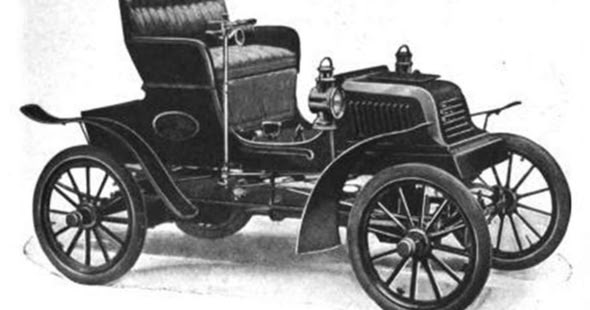
"Khaleeha Tesaddi".. so, are you with "Khaleeha Tesaddi"? You haven't written about the subject.. what do you say we leave it standing until it gets cheaper?
The truth is that I did not join the "Khaleeha Tesaddi" campaign.. because the idea that "the citizen should leave it standing until it gets cheaper" is a monumental mistake.
On the other hand, anyone who defends car dealers and their greed is a man "on the take" with no way out.. someone is paying him to write.. or he is nothing but a donkey pretending to be clever.
So then, what is your opinion?
For me to speak on this subject, I had to read a little.. and research and listen to respectable transport experts.. and then form an opinion.
And thank God, I formed my opinion.
Don't leave it standing until it gets cheaper.
The real solution is for you to "leave it standing" forever.
What does that mean? It means don't buy a car at all.
What is this riddle, and what is this subject?
The subject has historical roots, and it is neither new nor Egyptian.. to begin with.
The story began in 1870.. when a man named "Siegfried Marcus" built the first gasoline-powered internal combustion engine in history.. then along came a man named "Karl Benz" in 1879.. took Siegfried's engine and put it into a body with wheels.
And since he merged two inventions and produced something new from them.. he registered for us the patent for the world's first motor car. That car was for the elite and the wealthy.. and its price was about the price of a pack of cigarettes today.. so not just anyone could buy it.
With time, people began to look at the car's passenger as a respected wealthy man from the elite.. and at the rider of public transport, or the bicycle, or anything else, as a poor, lowly man from the very bottom of the class ladder.
A little later, in 1913.. a model came out in America called the "Ford Model T".. the first car within everyone's reach, at a good price that many could afford.
And cars came within everyone's reach.
Then in 1938 something strange happened.
The "General Motors" company began buying trams and inner-city railcars from the United States government.
And then it destroyed them.
Yes, you did not misread the sentence.. it destroyed these cars completely.. in what was historically recorded as the "General Motors streetcar conspiracy".
The tram cars packed together in this picture used to roam the streets of America and carry people to their destinations.. and General Motors collected them in order to destroy them completely.
And it got what it wanted.
Public transport dwindled and became rare.. and it became necessary for you to buy a car.
Then in 1941 the United States woke up to a real nightmare.. the railways were out of order, the roads were terribly congested, and cars had come within everyone's reach and could find nowhere to move for the sheer crush of traffic.
And so the game of widening inner-city roads and building bridges began.. which simply postponed the crisis across time and space by only about two years.. because when the roads were widened and the bridges increased, people were encouraged once again and bought more cars.. in a vicious, empty circle with no end.
At the very same time, the Second World War was stretching out and rising from its slumber, and "Hitler" was deciding to occupy the world and burn half the globe and enslave the other half.
And the United States was taken by surprise by a more dangerous disaster.
That its congestion was not leaving room for any strategic movement of tanks, military equipment or troop carriers.. if the war were to reach it.
And it was taken by surprise by an even more terrifying disaster.
People's moods turned for the worse and they became more ready to quarrel.. because congestion, honking horns and exhaust fumes increase tension, and with the tension a person goes through on the road he arrives at work in a bad state and works badly and gets blamed and grows tenser, and returns home tense and quarrels with his wife, and sleeps and wakes up in distress and goes out to grow tenser still in the traffic.. in another terrifying, deadly circle.
And diseases appeared, such as diabetes, blood pressure, colitis, and strokes of the brain and the heart.
And this tension reached the decision-makers and led to their bungling in the darkest moments of the world.
The Second World War.
The Americans realized that they had caused a disaster.. and began to think of a solution that would encourage people not to buy cars.. and to return to mass and public transport.
But a very powerful faction stood on the side of the car makers and dealers against the state.
The oil companies.
Without cars, their oil sales would fall to a minimum and the losses would be enormous.
And because the time was critical and it would not do to enter into an internal war and economic battles in the thick of the war.. the United States had to wait for the Second World War to pass peacefully.. while cars, tension and blood pressure increased and increased every single day.
Look at the difference in tension and peace of mind between a resident of Cairo with its terrifying congestion and a resident of less crowded Alexandria.. and compare them.. and compare a resident of Alexandria with a resident of Aswan, for example.
And then something happens that changes the course of events.
The German "Albert Einstein" had abandoned Nazi Germany, which, out of its extremism, bureaucracy and intransigence, had become repellent to talent in the thick of the war.. and set off for the United States.. which welcomed him and opened its arms to him, its laboratories, and offered him its resources with complete willingness.
And a short while later he hands them a golden equation that changes the history of the world.
"Energy = mass × the square of the speed, or E = mc2".
Because of this equation, the United States builds the first atomic bomb and makes two models of it, testing them over Japan in August of 1945.
And it brings the war to a sudden end.. and a single powerful pole emerges in the world that terrifies everyone.. America.
And after that, America tries to find solutions to the matter of congestion and tension and the diseases that cost the state hundreds of millions annually.. and shorten people's lives, and it tries many solutions and fails, until a decisive moment.
The moment of the October War of 1973.
So what is the connection between this subject and how Egypt, with its war, affected transport inside America?
We will continue talking about that along with the rest of the subject later.. and the talk is not over....
#Khaleeha_Tesaddi_Forever