"Muhammad Ali's" war with the Wahhabis was forced upon him at first.. because "Muhammad Ali" did not want to fight.. he wanted to devote himself to building the economy and the army.. we will of course not talk about the stories of farms, waterwheels, and factories.. all of that is known about "Muhammad Ali".. and any child in the fifth grade of primary school has it memorised.
The Wahhabi movement began at the hands of "Muhammad ibn Abd al-Wahhab".. and it is almost entirely innovation from beginning to end... when you speak of any book by the jurists of "Abd al-Wahhab's" era who refuted him.. the supporters of Wahhabism will reply to you without any evidence or authority and tell you: "That is a forged reference".. even the book of his own brother, the Imam, the Hanbali judge "Sulayman".. they deny it.
The Ottoman Empire sensed the danger of the Wahhabis to its influence.. so it wrote to the governors to fight them.. and among them was "Muhammad Ali".. to whom a direct order came from Sultan "Mustafa IV ibn Abd al-Hamid" in the year 1807.. so he makes a few excuses about internal front problems and ignores the Ottoman order.
A long time passes.. and we saw how the Mamluks' struggle for power ended with the Citadel massacre in 1811.. and "Muhammad Ali" had begun to think in a different way.. for he saw that if he fought the Wahhabis, that was a golden opportunity for him to extend his influence over the Hejaz.. and that is a great matter.. the keys to the Kaaba.. the qibla of the Islamic world.. awe, respect, prestige, and dominion.
"Muhammad Ali" wakes up from the filth of the Mamluks.. and is surprised that Wahhabism has begun to reach Egypt.. not militarily yet.. but softly.. it began to infiltrate the common people through its emissaries who insinuate themselves among the people.. and then their call began to affect the sheikhs of al-Azhar itself.
And the truth is that "Abd al-Wahhab," had he directed towards the people the jurisprudence that Sheikh "Humphr" taught him, no one would have followed him.. but at the instigation of England he began to revive a heritage that had almost died out.. a heritage that, had Wahhabism not revived it.. would have long since ended and gone into the folds of oblivion.
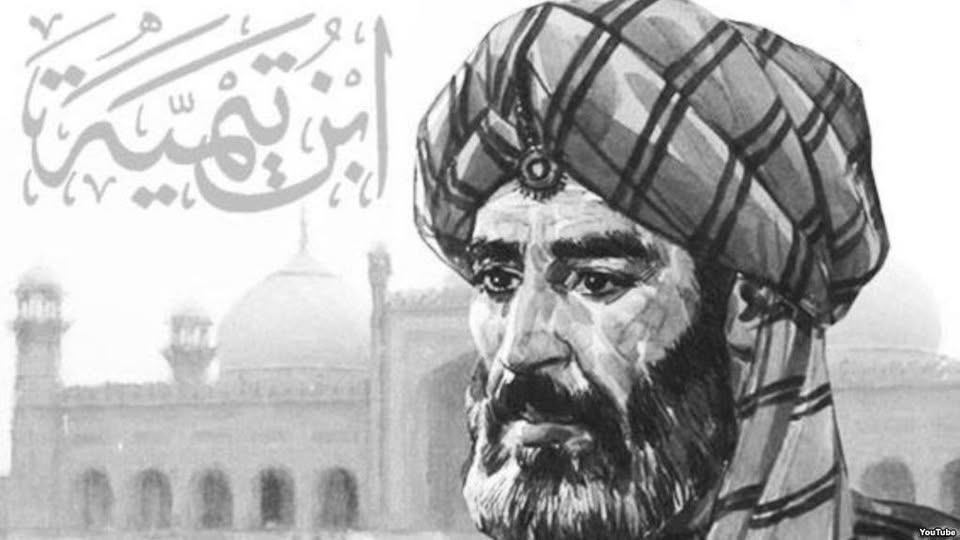
The heritage of "Taqi al-Din Ibn Taymiyyah al-Harrani."
And in order to grasp Wahhabism and speak about it and its wars properly.. we must pause for a few moments over this man.
For in Islam the killing of a soul is not permitted except for reasons that can be counted on the fingers.. such as a life for a life.. banditry, or terrorism, or rebellion against the state.. and so on.
But in the fatwas of "Ibn Taymiyyah" there is something entirely different.. for words like "lawful to shed blood" appear 22 times, and "if he repents, otherwise he is killed" 100 times, and "he is killed" 849 times, and "his neck is struck" 41 times...!
And "Ibn Taymiyyah" set off declaring people unbelievers in his fatwas without reckoning.. so in the Collected Fatwas words like "unbelieving apostate" appear 29 times.. and "unbeliever" 917 times.. to the point that the Sultan summoned him to Egypt in the year 705 AH, and a council was convened for him at the Citadel of the judges of the four schools of law.. and they debated him.. and issued their ruling that he was an ignorant innovator.. and a sentence of imprisonment was issued on that basis.
And some interceded to have "Ibn Taymiyyah" released.. and the judge "Badr al-Din ibn Jama'a Abu Abdullah al-Kanani al-Hamawi" was brought.. the judge of Egypt and the Levant.. and he was the one who was in fact titled "Sheikh al-Islam".. and he listened to the words of "Ibn Taymiyyah" and his fatwas.. then decided to release him on condition that he refrain from issuing fatwas forever.. and Ibn Taymiyyah refuses and remains in prison.
The Emir "Husam al-Din Muhanna," the emir of "Palmyra," intercedes for him.. so they release him after a year and a half.. with a promise that he would refrain from issuing fatwas.
But as soon as he left prison.. "Ibn Taymiyyah" began walking about the markets and mosques, issuing fatwas and speaking.. and he set about declaring the Sufis unbelievers.. so some of them complained about him, headed by the Maliki jurist "Ibn Ata' Allah al-Sakandari," to the Sultan.. so he summoned him and convened a council for him in the House of Justice.. and in it the jurists said that he was "a madman".. and the judge gave him the choice between 3 things.. either he returns to his own country "Damascus".. or he stays in Alexandria.. but stays there disciplined and silent.. or he is imprisoned.. so he chose to return to Damascus.
He did not stay long in Damascus.. and returned from it to Alexandria.. and again began issuing fatwas.. until he was threatened with imprisonment once more, so he fled to Damascus to issue fatwas there.
And the strange thing is that Damascus itself.. his birthplace.. could not tolerate him for a few months.. so the judge "Shams al-Din ibn Muslim al-Hanbali" confronted him and debated him.. and won against him.. and advised him to stop issuing fatwas.. so "Ibn Taymiyyah" agreed grudgingly.
But a few days later he returned to issuing fatwas, saying "I cannot conceal knowledge!".. and then he went and declared "Ibn Sina" himself an unbeliever.. and said of him:
"He only took from the heretics who claim affiliation to the Muslims, such as the Ismailis"...!
So an order was issued by the Sultan himself forbidding him from issuing fatwas.
"Ibn Taymiyyah" refused to obey the order.. and continued to issue fatwas.. so a new order was issued by the Sultan reaffirming the ban on him issuing fatwas.. and when he did not comply.. a trial was again convened for him on the four schools of law.. and they debated him.. and a decision was issued to imprison him.. and he remained in prison until his death in the year 728 AH.
Among Ibn Taymiyyah's fatwas is that if you stand in the mosque and say in an audible voice "I intend to pray such and such a prayer".. you are called to repent or else you are killed! Collected Fatwas (vol. 22, p. 236), and whoever catches a snake and eats it is called to repent or else he is killed .. Collected Fatwas..(3 - 51).. and whoever is late for prayer because of work or hunting or anything else is called to repent or else he is killed.. Collected Fatwas..(5 - 80).. and dozens of similar fatwas.
That is why he was put on trial and imprisoned.. and his student Ibn al-Qayyim al-Jawziyya was imprisoned with him in the year 726 AH.
Of course this post will be called "a war on Islam".. even though it was not I who imprisoned "Ibn Taymiyyah" in the Citadel prison and called him a mad, innovating, deviant man.. it was the jurists of his own age who imprisoned him.
But even so.. I will be an "unbelieving secularist" and "one of the followers of Islam al-Buhairi".. whom, by the way, I neither like nor follow.. even though these are established facts written by jurists like "Ibn Kathir".. not of my own invention.
This is the heritage of Ibn Taymiyyah that the Wahhabis revived and set about applying by the sword.. and today, by the way, most of ISIS's fatwas are based on this heritage.
As for "Muhammad Ali's" war against this terrible group, it was not as easy as he imagined at the beginning...
And that war we will discuss later.
And the discussion remains to be continued.
---------
Earlier posts:
---------
1 - http://bit.ly/30anGpF
2 - http://bit.ly/2Q7e6zv
3 - http://bit.ly/2VVkcrX
4 - http://bit.ly/2WdncAb
5 - http://bit.ly/2HzZSo7
6 - http://bit.ly/2MeJZHO
7 - http://bit.ly/30Y8tZo
8 - http://bit.ly/2K6yBMd
9 - http://bit.ly/2FczAXt
10 - http://bit.ly/2F176PY